
*Screenshot taken as 5/27/2026. Visit here for up-to-date data.
Since they started flying drones as first responders in 2025, the Schenectady Police Department has logged 1,437 flights and arrived first on scene in 835 of them. That’s a 58% rate that has quietly rewritten how the department answers calls.
The numbers on their public transparency dashboard tell the story. 413 dispatches avoided. 62 DFR-assisted arrests. 353 objects located from the air. An average flight time of 14 minutes per call. What started as a niche tool for serious incidents has become an instrumental everyday utility, one that Sergeant Peter Montalto, who runs the program, says has fundamentally changed what efficient policing looks like.
An Aerial View
Helicopters have long given police an aerial view of serious emergency situations, and they remain an invaluable resource for public safety agencies. Drones complement that capability by making an aerial view economically viable for the everyday calls that make up the bulk of police work.
“With DFR, we can basically do the same thing as the helicopter, but we can use it for everything,” says Sergeant Montalto. “We don’t have to reserve it just for a serious robbery or homicide. It’s just a lot more cost effective. We can put it up all day and clear calls with it.”
The shift from “in case of emergency” to “always available” is what produced the dashboard’s most conspicuous number: 835 calls where the drone was first on scene. That means that in more than 58 of every 100 dispatches that involve a drone, the eyes in the sky beat the police cruiser to the scene.
Now, it’s important to remember that this is a model of deployment that won’t work for every agency, but has worked well for Schenectady where they’ve resourced their drone program with the goal of clearing calls.
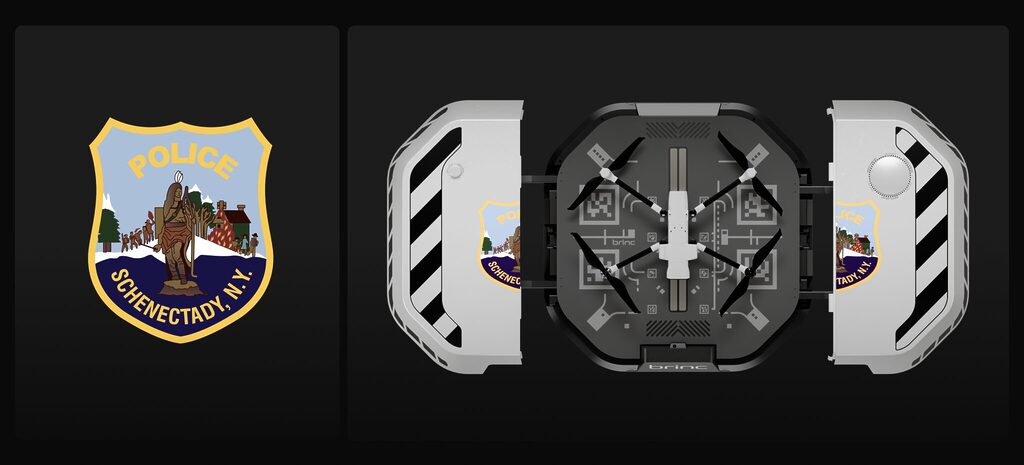
All About Efficiency
The dashboard shows 455 avoided dispatches at a 32% rate. So nearly one third of the time the drone is launched, an officer never has to physically respond. Property checks, 911 hang-ups, and other low-risk incidents that used to take up much of an officer’s day now take a few minutes of flight time and no ground response.
Says Sergeant Montalto: “We’re there in two minutes, we check, and we’re out. And that officer is freed up to do something else. It just adds up across call after call after call.”
The downstream effect lands directly on residents.
“It just makes us more efficient,” says Sergeant Montalto. “Because officers aren’t spending time on the calls we handle, they can take other calls, which reduces our pending queue and wait times for citizens.”
And when ground response is needed, the drone still buys precious minutes.
“We can start heading to a call before the dispatcher even puts it into the computer. We’re already a few minutes ahead of the officer, and we don’t have to follow streets, red lights, or traffic.”
Better Information
It’s not just efficiency that DFR provides. The dashboard’s mission-type breakdown is heavy on property checks (such as suspected burglaries), but also fights, larcenies, persons with weapons, and domestic disputes. Why? Because a drone provides better information for responding officers.
“We’re the witness in the sky,” says Sergeant Montalto. “We give officers the information they need to do their job safely and effectively before they arrive or while they’re on scene.”
This includes capabilities Montalto admits he undervalued at first. For instance, the drone’s onboard speaker, originally a footnote in his planning, has turned into one of the program’s most useful tools.
“It’s a lot more useful than you’d expect, even just for minor situations,” he says. “It gets suspects prepped for arrest rather than hiding in a backyard and having an officer stumble on them and end up in a physical fight.”
The thermal camera has been similarly transformative.
According to Sergeant Montalto, “I can switch to thermal even in the middle of the day and pick up squirrels in the woods I couldn’t see through a regular camera. If a suspect is hiding in there, I’d find him.”
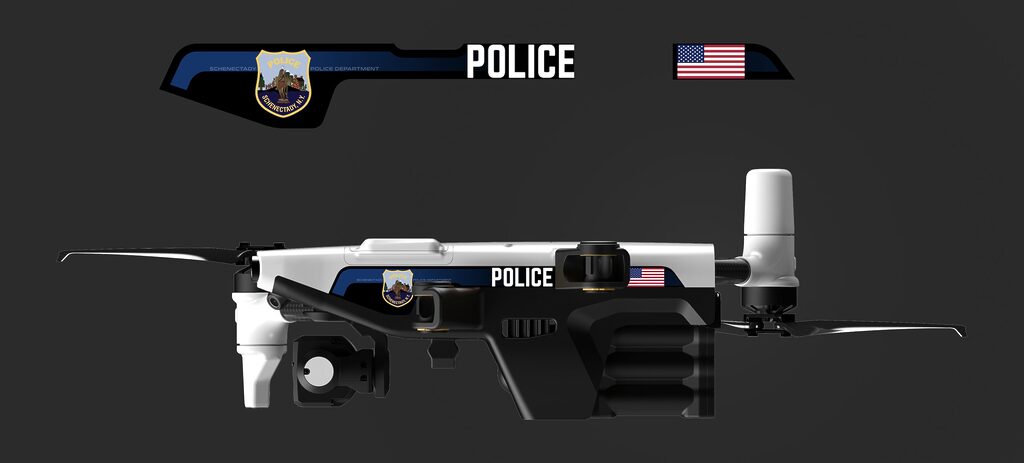
Surprise Use Cases
Several of the DFR program’s biggest wins were not in the original playbook. Retail theft is one.
“I didn’t think we’d be using it much for this, but we get tons of retail thefts,” says Sergeant Montalto. “We’ll watch suspects ditch stolen merchandise, put it behind a bush or in a bag and walk away like it’s not theirs. But we have it on video.”
Weapons recovery is another unexpected use case. “We’ve found a lot of handguns with it,” says Sergeant Montalto, referring to some of the 353 objects logged on the dashboard.
What’s Next?
Even with the program’s success, Sergeant Montalto is candid about DFR’s current limitations. Battery life remains the single biggest constraint.
“The most frustrating part is when you’re in the heat of a moment, a suspect is fleeing, and you know you can stay on them, but you don’t have the battery to do it,” he says. “I think Guardian will really solve that problem.”
He’s also looking forward to expanded thermal capability and sees more launch points as a clear path to even bigger numbers next year. “If we could just launch from closer to where the action is, that would help our flight time tremendously,” he says.
The Schenectady transparency dashboard is a public record of what policing looks like when an aerial unit is treated as everyday infrastructure rather than a last resort. Behind the numbers is a police department working faster, smarter, and safer than ever before.
New program offers discounts based on existing drone fleets. No trade-ins required.
SEATTLE, WA – Jan 23, 2025 – BRINC, the world’s leading public safety drone company, proudly announces the launch of BRINC Beyond, a groundbreaking program designed to help public safety agencies transition from unfocused enterprise drones to BRINC’s purpose-built solutions. This initiative promotes affordability, operational continuity, and the accessibility of best-in-class technology tailored to life-saving missions.
Public safety agencies have long relied on off-the-shelf generic drones for operations. New purpose-built systems like Responder and Lemur 2 have brought glass-breaking, two-way audio, emergency lights and sirens, AED delivery, CAD integrations, and more to the market. With these new mission-specific capabilities on offer and regulations set to render many drones non-compliant, generic hardware is no longer a perfect fit for public safety operations.
BRINC Beyond: Transition Without Trade-Offs
Drawing on over 300 years of combined public safety experience, BRINC understands the unique challenges public safety professionals face. BRINC Beyond is a transitional program to help agencies adopt future-ready drone solutions without giving up their existing technology. This phased approach allows agencies to adopt compliant, purpose-built technology at their own pace, minimizing disruption while maximizing effectiveness.
BRINC is committed to making its purpose-built drones accessible by matching competitor discounts, ensuring agencies can transition without exceeding their budgets. By choosing BRINC, agencies gain access to advanced technology designed specifically for public safety, empowering them to tackle each emergency response mission safely and confidently.
The Benefits of BRINC Beyond
- Generous Credits for Non-Purpose-Built Drones: Agencies can receive credits of up to $15,000 per drone, depending on the model, regardless of the country of origin or manufacturer.
- Credit Match Guarantee: If another vendor offers a similar credit, BRINC will match it, ensuring agencies maximize their investment.
- No Trade-In Required: Agencies can continue using their existing fleet while scaling up with BRINC’s purpose-built drones, reducing operational disruption.
“At BRINC, we understand that agencies need support as they navigate the challenges of transitioning to new technologies,” said Blake Resnick, CEO of BRINC. “With BRINC Beyond, we’re attempting to minimize the financial and operational barriers of this process, empowering agencies to adopt drone solutions designed for their missions today.”
To learn more about BRINC Beyond, please visit: https://brincdrones.com/brinc-beyond
Get Started With BRINC Beyond
The landscape of public safety drone technology is shifting. New laws passed by Congress will require first responders to transition to drones manufactured domestically. Simultaneously, advancements in public safety drone technology have outpaced the enterprise drones many agencies initially relied on for their drone programs.
While change is inevitable, it’s unrealistic–and unfair–to expect first responders to abandon the tools that helped establish their drone programs. Whether for reasons of national security or operational efficiency, a smooth transition is essential.
That’s why BRINC has developed the BRINC Beyond program—a forward-thinking solution designed to help agencies transition from their existing generic equipment to purpose-built for public safety, American-made drones without disrupting their operations.
A Seamless Switch. No Compromises.
The BRINC Beyond program empowers agencies to adopt best-in-class drones while retaining their existing fleets during the transition. Rather than requiring a trade-in, this phased approach allows first responders to scale their capabilities by operating purpose-built and generic drones side-by-side.
Through BRINC Beyond, agencies can purchase discounted BRINC drones while gradually transitioning from their general-purpose hardware, ensuring continuous access to critical tools throughout the transition.
The Benefits of BRINC Beyond
- Generous Credits for Non-Purpose-Built Drones: Agencies receive credits of up to $15K per drone, depending on the model, regardless of the country of origin.
- Credit Match Guarantee: If another vendor offers a similar credit, BRINC will match it, ensuring agencies maximize their investment.
- No Trade-In Required: Agencies can continue using their existing fleet while scaling up with BRINC’s purpose-built drones, reducing operational disruption.
Why Purpose-Built Matters
At BRINC, we believe public safety agencies need drones specifically designed for their unique needs. Generic platforms can fall short in meeting the rigorous demands of emergency response, where reliability and mission-specific capabilities are critical.
Our purpose-built drones feature category-defining technologies that have transformed public safety operations.
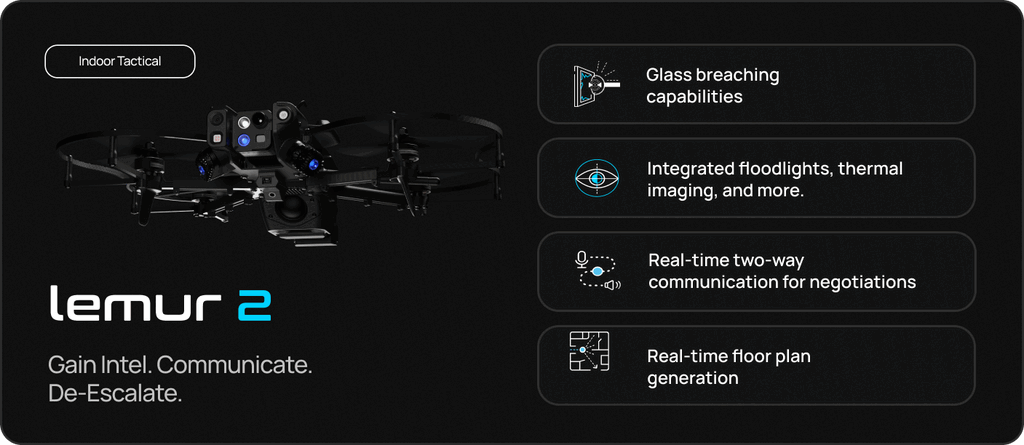
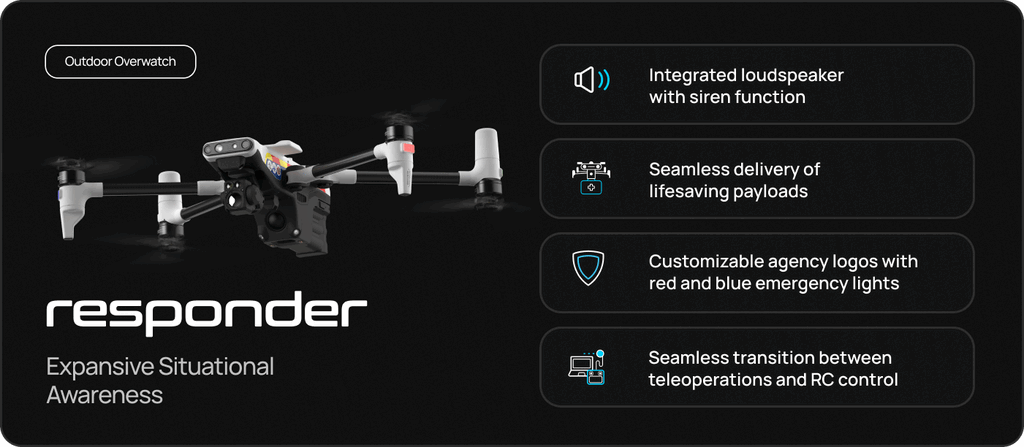
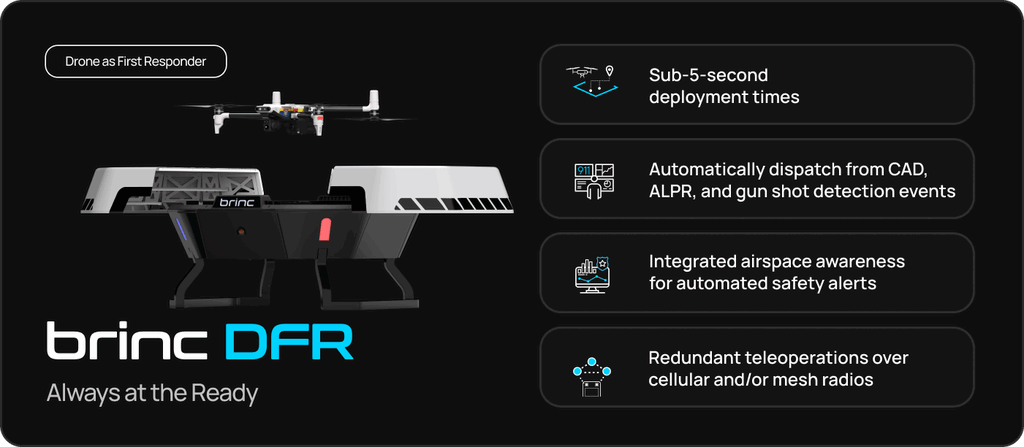
These purpose-built features redefine what’s possible in public safety, saving lives and enhancing operational efficiency.
Building a Competitive Domestic Drone Industry
The transition to a robust domestic drone industry won’t happen overnight. But BRINC is making strides. In 2024 alone, we’ve more than doubled the production floorspace in our Seattle manufacturing facility and we continue to invest heavily to meet the growing demand for American-made, purpose-built solutions.
Transitioning to an entirely domestic fleet requires a phased approach. Mixed fleets of existing hardware and BRINC’s advanced drones represent the first step toward a fully domestic, purpose-built solution for public safety agencies.
Scaling to Support the Industry
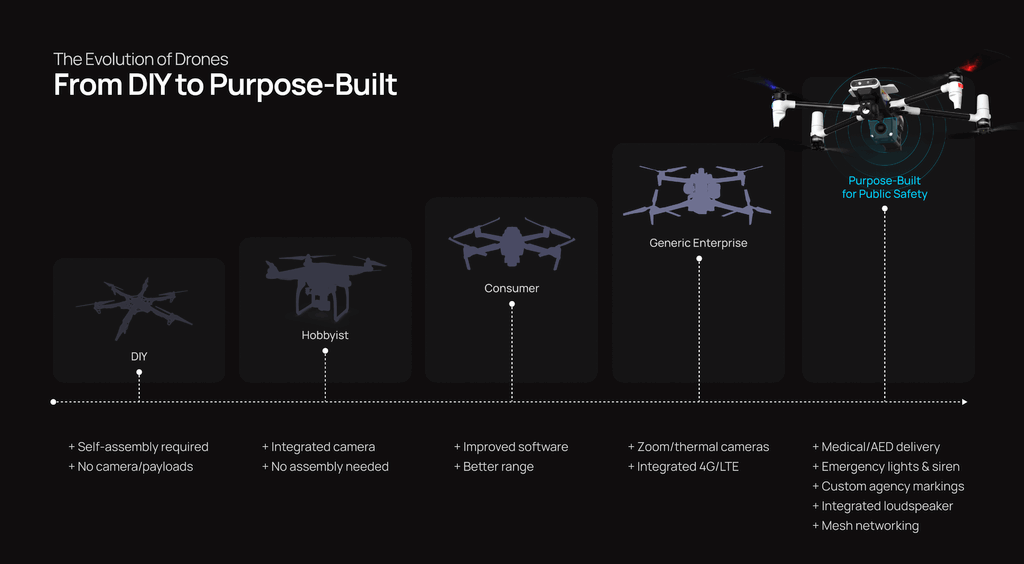
Officers don’t drive Priuses, they drive Police Interceptors. Similarly, you won’t see a first responder with a GoPro strapped to their chest. Consumer-grade or generic drones are great to kickstart a program, but they can keep first responders wanting more when seconds matter most. Whether it’s low-range, forced firmware updates, software that overrides pilot actions, or the need for several other software platforms for basic functionality, public safety demands better solutions.
That’s the evolution BRINC is bringing to public safety. With the first-ever and the only purpose-built platforms for indoor and outdoor drone operations and the software ecosystem to boot, they’re truly tailor-made.
Supporting First Responders
At BRINC, we’re committed to ensuring first responders always have the tools they need to protect their communities. The BRINC Beyond program exemplifies this commitment, offering a practical, affordable, and flexible solution to support agencies through this critical transition.
Together, let’s take public safety operations to the next level.
To learn more about the BRINC Beyond program and discover the value of your existing fleet, contact us below or reach out to your BRINC representative.
Get Started With BRINC Beyond
For those public safety organizations interested in a simpler path towards Federal Aviation Administration approvals that allow drone pilots to fly beyond visual line of sight (BVLOS), we’ve got good news.
With end-to-end integration and advanced airspace awareness built into our drone solutions, BRINC meets guidelines for a shielded operations approach that permits drones to fly BVLOS. In fact, our partners over at the Redmond Police Department, recently received just such a waiver from the FAA that will allow them to deploy more 911 response drones.
A More Streamlined Approach
While many vendors have separate drone operations, tele-operations, and a third-party airspace awareness system, BRINC maintains a simpler approach to airspace awareness that pushes all notifications to the drone pilot in real time.
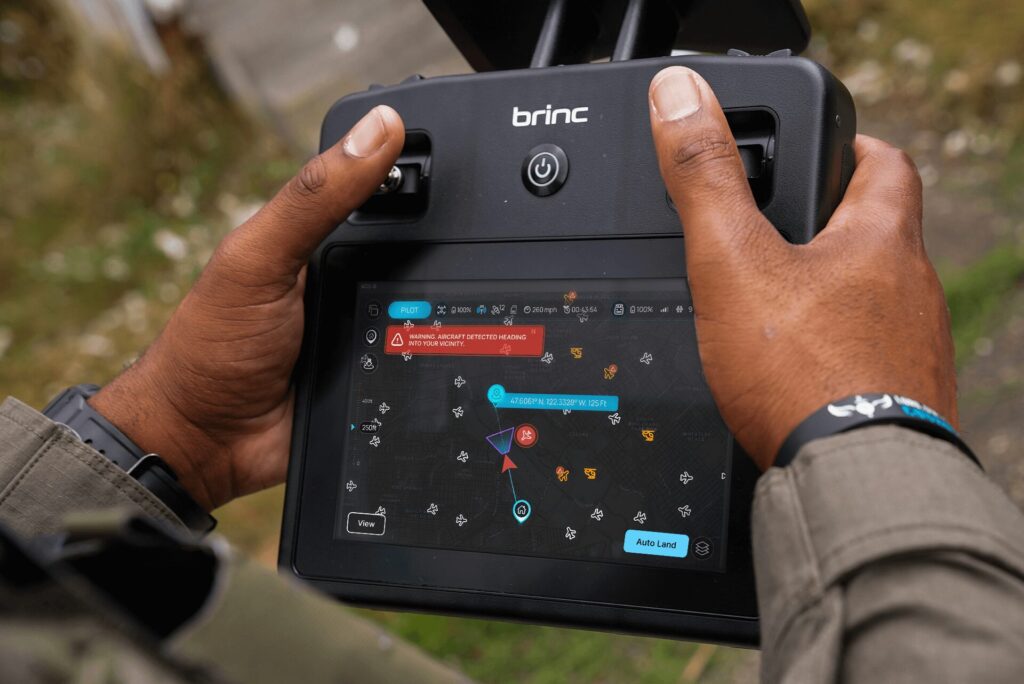
Equipped with ADS-B receivers, our drone solutions seamlessly pull data into our system, providing flight intel to the pilot for safe operations. And just as importantly, with ADS-B receivers, ASTM parachutes, and anticollision lights, it’s now easier than ever for public safety organizations to meet all requirements for the shielded ops waiver allowing you to operate BVLOS up to 200 feet AGL.
Covered From All Angles
In addition to physical ADS-B receivers in the Station and Responder controller (covering all operations from DFR and patrol-led DFR to more traditional ops), we have networked ADS-B so you can check the airspace outside your normal operating area or before takeoff. All this is merged into a single pane of glass on LiveOps.
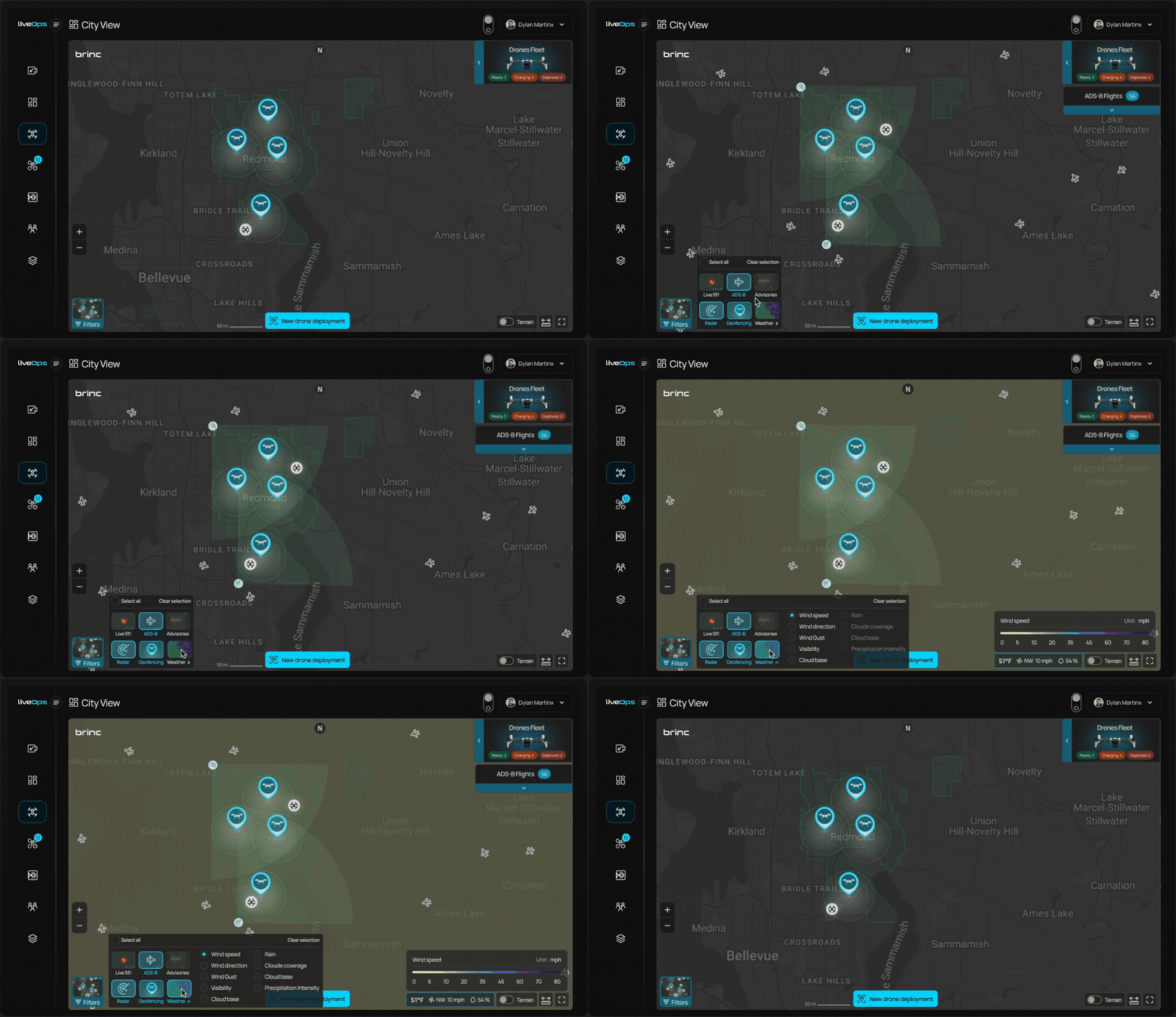
The Proof Is in Redmond
But don’t just take our word for it. Using BRINC docking stations, Redmond PD recently announced the expansion of its Drone as First Responder (DFR) program after successfully applying to fly BVLOS using a shielded ops approach.
This allows their DFR program to further assist with police calls for service, improve emergency response times, and enhance public safety through near-continuous flight capabilities.
What About Radar?
Of course, the removal of visual observers up to 400 feet is also being approved with radar. BRINC’s partnership with Echodyne allows us to not only add a layer of safety and reliability, it also provides a path for our customers to meet the stringent FAA requirements for BVLOS operations without a visual observer.
While you might get 200 extra feet of flight altitude with radar, the advantage with shielded ops is that it’s simpler to integrate into your current drone system, it’s cheaper, and most importantly, it’s an easier waiver process.

Interested in learning more about a shielded ops waiver to fly BVLOS? Get in touch with us here.